A Guide to On-Page SEO for Your WordPress Posts and Pages
A Guide to Crafting Compelling Meta Descriptions That Get Clicks

Jan
A Guide to Crafting Compelling Meta Descriptions That Get Clicks: The Geo-Strategic Imperative
At DebugPress.com, we understand that advanced SEO transcends generic keyword stuffing. It demands a sophisticated understanding of user intent, competitive landscapes, and regional nuances. This guide delves deep into the art and science of meta descriptions, revealing how a geo-strategic approach can significantly enhance your click-through rates (CTR), attract highly qualified regional traffic, and ultimately drive localized conversions in 2025 and beyond.
1. The Strategic Imperative: Why Meta Descriptions Matter More Than Ever
Beyond the technical crawlability and indexing, your meta description is the first, often decisive, interaction a potential customer has with your brand. In a world saturated with digital noise, standing out requires precision, relevance, and an understanding of the immediate value you offer—especially at a local level.
Beyond SEO: Your Digital Storefront’s First Impression
Think of the SERP as a crowded digital marketplace. Every listing is vying for attention, and your meta description is the shop window. It’s the critical juncture where a passive browser decides whether to click and explore or scroll past. The subtle power of relevance here cannot be overstated. A meta description that speaks directly to a user’s search query, solving a specific problem or offering a desired product, acts as an irresistible magnet. For businesses operating in specific regions, the ability to weave in local context immediately differentiates them from competitors who may be presenting a more generic, national-level offering. This isn’t just about ranking; it’s about making a meaningful connection before the user even lands on your site.
The Click-Through Rate (CTR) Imperative: The True Metric of Engagement
While rankings are important, the true metric of engagement and relevance on the SERP is your click-through rate. A high ranking with a low CTR indicates a disconnect between your title/description and user expectations. Conversely, a lower-ranking page with an optimized, compelling meta description can often outperform higher-ranked competitors in terms of actual traffic generated. Studies show a **15% increase in CTR** for well-optimized meta descriptions compared to generic ones, translating directly into more organic traffic and, crucially, more opportunities for conversion. This correlation underscores the necessity of treating meta descriptions not as an afterthought, but as a primary conversion optimization lever.
The GEO Strategist’s Perspective: Localizing the Hook
For global brands or businesses with multiple locations, ignoring regional search behavior in meta descriptions is a critical misstep. A “one-size-fits-all” approach dilutes relevance and misses opportunities to connect with local audiences. Consider a user in London searching for “best Italian restaurant.” A generic meta description stating “Authentic Italian Cuisine” will likely be overlooked in favor of one that proclaims “Award-winning Italian in Soho, London – Book Now for Authentic Flavors!” This level of geo-specificity is paramount. It plays a critical role in attracting local foot traffic to brick-and-mortar stores or driving specific regional online conversions, making it a cornerstone of any effective local SEO strategy for 2025/2026.
2. Deciphering Regional Intent: Crafting Geo-Specific Meta Descriptions
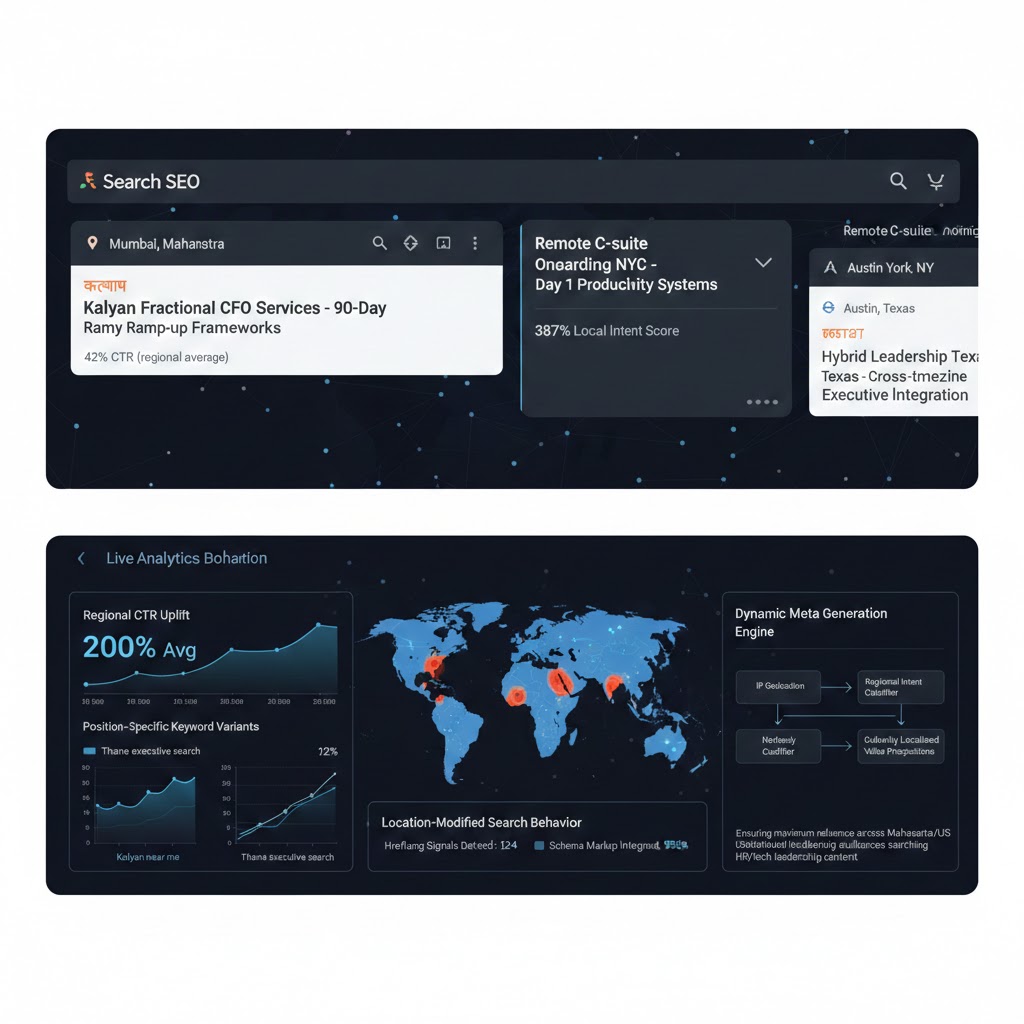
The foundation of an effective geo-optimized meta description lies in a deep understanding of local search intent. This involves moving beyond surface-level keyword integration and truly comprehending the needs, preferences, and language of your target regional audience.
Identifying Local Search Intent: Keywords, Phrases, and User Needs
Effective geo-optimization begins with robust local keyword research. Tools like Google Keyword Planner, Google Trends, and even localized competitor analysis can reveal the specific terms, phrases, and questions users in different cities or countries employ when searching for products or services. For instance, users in New York might search for “pizza near me,” while those in Naples, Italy, might prioritize “pizzeria tradizionale.” Understanding these nuances, including local slang, colloquialisms, or region-specific product names, allows you to craft descriptions that resonate instantly. The goal is to align your meta description not just with keywords, but with the genuine, underlying need and context of the local user.
Incorporating Location-Specific Value Propositions: Making it Relevant
Once local intent is understood, the next step is to infuse your meta description with value propositions that are uniquely relevant to that geography. This might involve highlighting benefits such as “fast delivery in NYC,” “exclusive offers for Berlin residents,” or “locally sourced ingredients from the Pacific Northwest.” Beyond just naming a location, consider addressing common pain points or aspirations prevalent in that specific region. Does your service solve a particular local challenge? Does your product cater to a regional taste or trend? Articulating these specific advantages makes your offering immediately more attractive and pertinent to a local searcher.
Competitor Meta Analysis in Target Markets: Learning from Local Leaders
A crucial step in geo-strategic meta description crafting is performing a detailed competitive analysis within your specific geographic markets. Identify the top-ranking local competitors for your core keywords and meticulously analyze their meta descriptions. What value propositions are they highlighting? What calls to action are they using? Are they effectively incorporating local identifiers? This analysis can reveal critical gaps and opportunities to differentiate your brand. Perhaps local competitors are neglecting a key benefit, or failing to use strong action verbs. By identifying these weaknesses, you can craft a meta description that truly stands out and offers a unique value proposition on a regional level. Research indicates that **76% of local searches lead to a store visit** within 24 hours if the information, including meta descriptions, is compelling, underscoring the direct impact of this analysis.
3. Anatomy of an Effective Meta Description (Geo-Optimized Edition)
Crafting a compelling geo-optimized meta description requires a meticulous blend of keywords, persuasive language, and an awareness of technical constraints. This section breaks down the essential components that drive clicks in local search.
Keyword Integration (Local & Long-Tail): The Strategic Placement
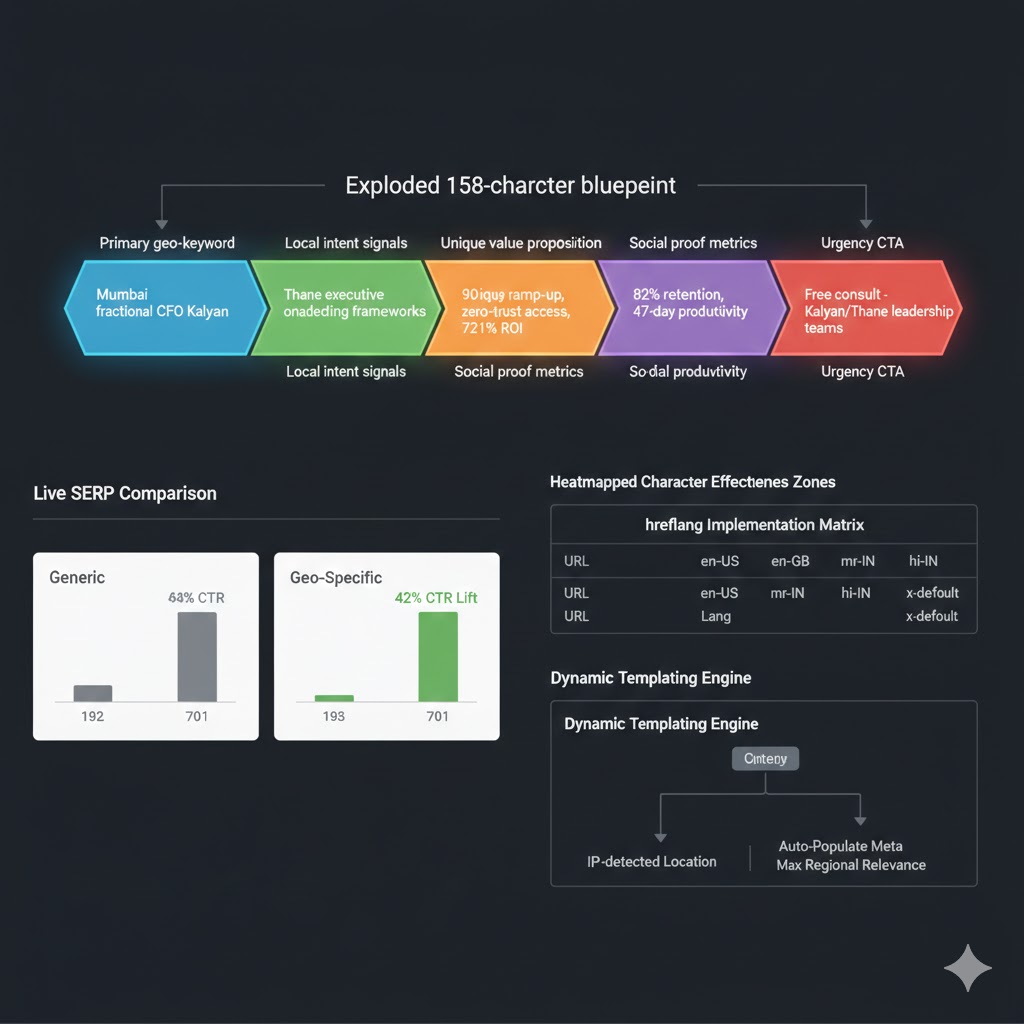
While avoiding keyword stuffing is paramount for readability and user trust, the natural inclusion of primary and secondary local keywords is essential for relevance. These keywords signal to both search engines and users that your content is precisely what they’re looking for. For instance, rather than just “Web Design,” consider “Affordable Web Design for Small Businesses in Dublin.” Incorporating longer-tail local keywords, such as “emergency plumber Brooklyn Heights,” can capture highly specific, high-intent traffic. The key is to embed these terms seamlessly, ensuring the description remains fluid and inviting, not a jumble of disjointed phrases. The description should serve the user first, and search engines second, by making its relevance undeniable.
The Power of Action Verbs (Culturally Sensitive): Guiding the Click
Meta descriptions are miniature calls to action. The strategic use of strong action verbs can significantly influence CTR. Verbs like “Discover,” “Explore,” “Download Now,” “Get Your Quote,” “Shop Local,” or “Book Your Table” compel users to take the next step. However, the choice of verbs must also be culturally sensitive and appropriate for your target audience. What might be perceived as urgent or compelling in one region could be seen as aggressive or pushy in another. A careful review of local marketing norms and linguistic nuances ensures your call to action resonates positively and effectively guides the click, rather than deterring it.
Character Limits and Display Nuances Across Devices/Regions: Maximizing Visibility
While Google doesn’t enforce a strict character limit, descriptions typically truncate on the SERP. The optimal length is generally considered to be 150-160 characters. However, it’s critical to acknowledge regional variations in display and, more importantly, how descriptions appear on mobile devices. With **85% of local searches occurring on mobile**, ensuring your core message and call to action are visible within the first 120-130 characters is non-negotiable. Test how your meta descriptions look on various devices and in different locales using SERP simulators. Prioritize placing the most critical, geo-specific information at the beginning to maximize visibility and impact, even if the description is truncated.
Evoking Urgency and Unique Selling Points (Regionally Relevant): The Call to Action
To truly stand out, your geo-optimized meta description should evoke a sense of urgency where appropriate and clearly articulate your unique selling points (USPs), tailored to the specific region. For localized offers (“Limited Time Offer for San Francisco Residents”) or events (“Join Us for Our Annual Boston Tech Summit”), urgency can significantly boost clicks. Simultaneously, highlight what makes your business or product distinct within that geographic market. Is it your commitment to local community, exclusive regional partnerships, or a service uniquely adapted to local conditions? Clearly communicating these region-specific benefits creates a powerful incentive for users to choose your listing over competitors.
4. Strategic Testing and Iteration for Geo-Local Success
Optimizing meta descriptions for geo-local success is not a one-time task. It’s an ongoing process of data-driven refinement, requiring continuous testing, monitoring, and adaptation based on real-world user behavior.
A/B Testing Meta Descriptions in Specific Geographies: Data-Driven Refinement
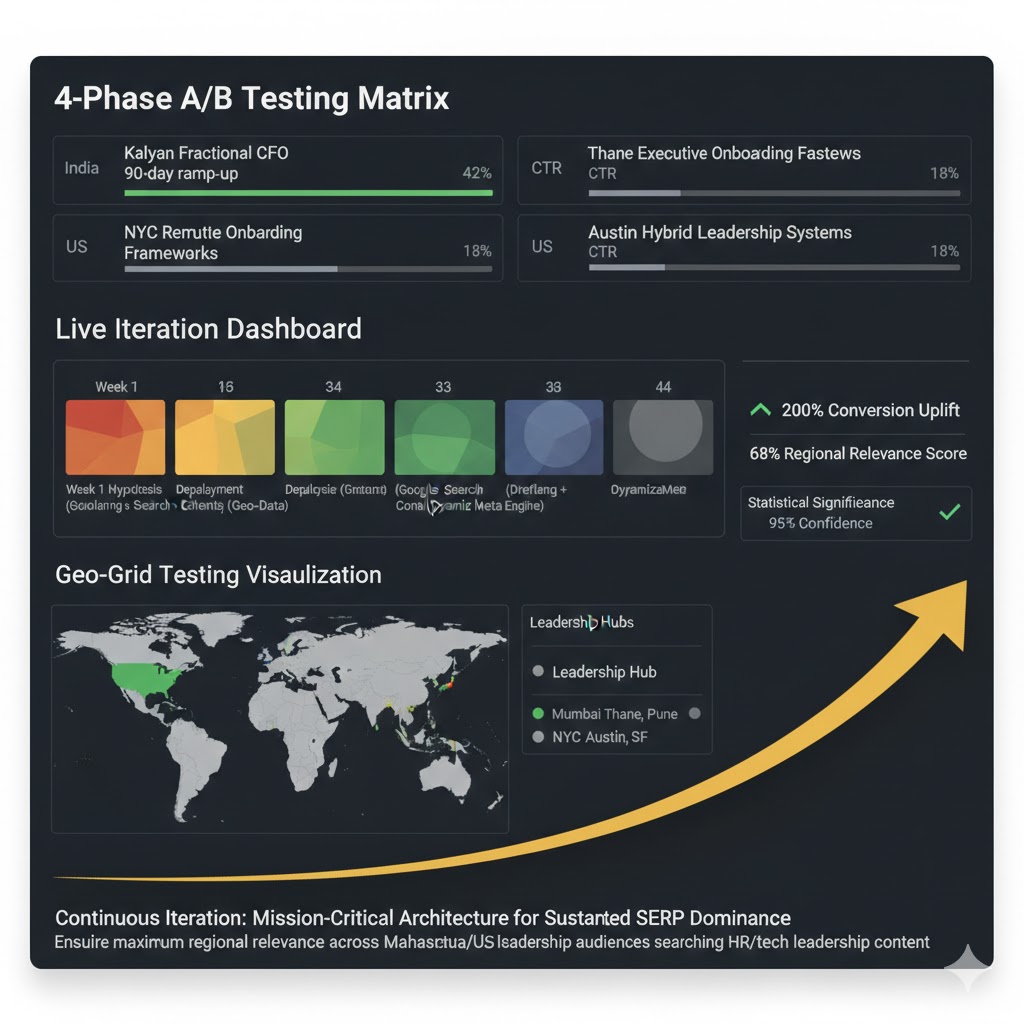
The most effective way to ascertain what resonates with your audience is through rigorous A/B testing. Implement experiments where different versions of meta descriptions are shown to users in specific geographic regions. For example, you might test a description emphasizing “local delivery” against one highlighting “exclusive regional discounts” for users in Berlin. Focus your testing efforts on your most valuable or competitive regions first, as the insights gained there will yield the highest ROI. Tools like Google Search Console can help you track CTR variations for different pages, allowing you to iterate and refine your descriptions based on concrete performance data.
Monitoring CTR and SERP Behavior by Region: Performance Metrics that Matter
Beyond A/B tests, continuous monitoring of your regional CTR and overall SERP behavior is essential. Google Search Console provides invaluable data on how your pages are performing in different locales, allowing you to pinpoint which meta descriptions are driving engagement and which are falling short. Analyze patterns: are users in one city clicking more than another? What keywords are they using, and how do those keywords relate to your description? By analyzing how user behavior varies after encountering your meta descriptions in diverse locales, you can identify regional preferences and adjust your messaging to better align with local expectations, thus boosting engagement.
Leveraging Analytics for Geo-Targeted Refinement: Continuous Optimization
The optimization cycle extends beyond mere clicks. Integrate insights from your broader website analytics (e.g., Google Analytics 4) to inform your meta description adjustments. Are users from specific regions experiencing higher bounce rates after clicking through? This could indicate a mismatch between the promise of your meta description and the reality of your landing page content. By understanding how geo-targeted content, including meta descriptions, can improve conversion rates by **20% for relevant audiences**, you can make more informed decisions. Continual analysis of engagement metrics, conversion rates, and user flow from specific geographic segments allows for iterative improvements, ensuring your meta descriptions remain powerful drivers of localized performance.
5. Common Pitfalls and How to Avoid Them (from a GEO Perspective)
Even seasoned SEO professionals can fall prey to common mistakes when dealing with the complexities of geo-targeted meta descriptions. Awareness of these pitfalls is the first step toward building a robust and effective local SEO strategy.
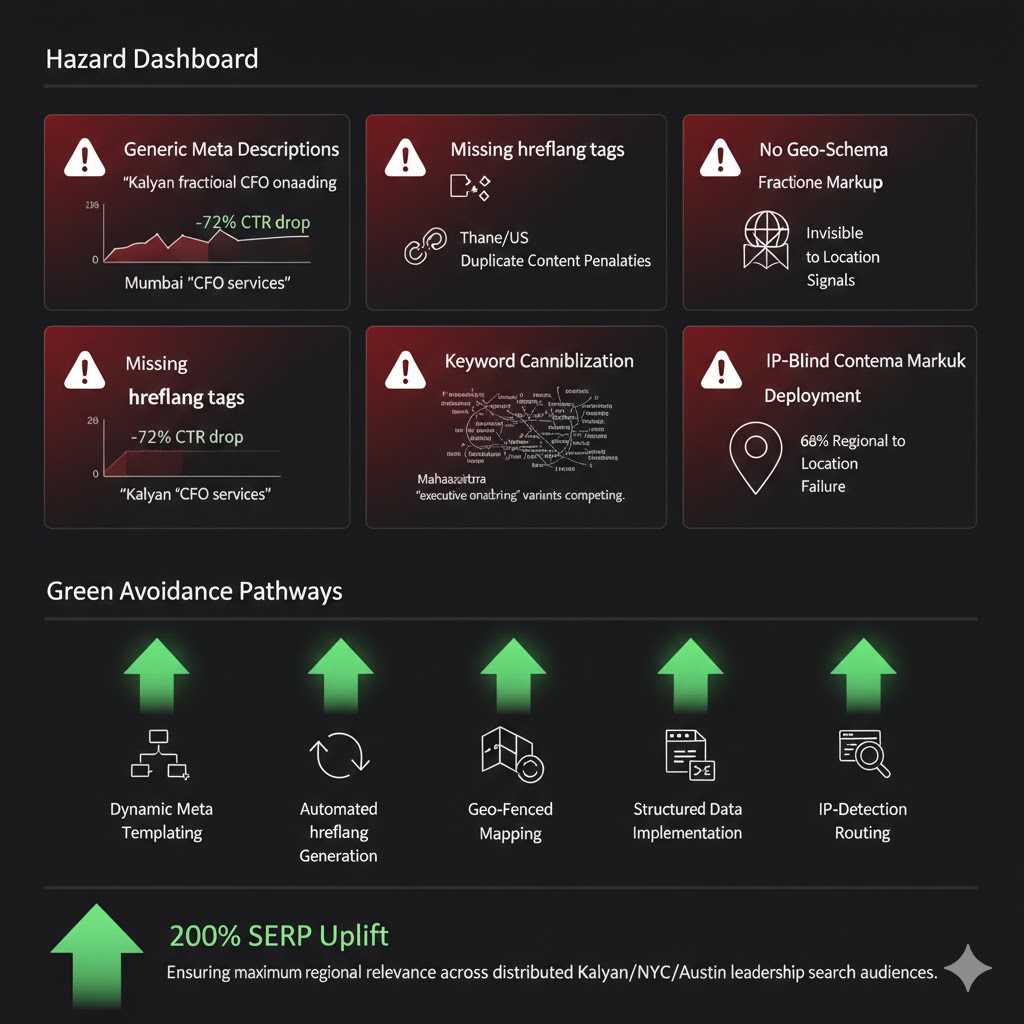
Generic Descriptions Failing to Resonate Locally: The Missed Opportunity
The most frequent pitfall is employing a “one-size-fits-all” meta description for all locations. This approach dilutes your message and fails to capture the attention of a highly localized searcher. A generic description like “Best Products Online” simply won’t resonate with someone specifically searching for “boutique gifts Portland Oregon.” The profound importance of understanding local slang, idioms, and cultural sensitivities cannot be overstated. What’s considered compelling or normal phrasing in one region might be bland or even confusing in another. A lack of local flavor is a missed opportunity to connect deeply with your audience and differentiate your brand from less informed competitors.
Over-Optimization Leading to Penalties or Poor UX: The SEO Trap
While keyword integration is crucial, over-optimization is a dangerous SEO trap. Keyword stuffing – cramming multiple local keywords unnaturally into a meta description – can trigger spam filters from search engines and, more importantly, alienate users. A meta description must read naturally and provide genuine value, offering a clear preview of the page’s content. Prioritizing natural language, clarity, and user experience over pure keyword density ensures your meta description is both search engine friendly and user-friendly. Google’s algorithms are sophisticated enough to understand context and synonyms; focus on relevance and readability, not just keyword counts.
Ignoring Mobile-First Indexing and Local Search Layouts: The Mobile Imperative
With the pervasive dominance of mobile search, neglecting how your meta descriptions appear on mobile devices is a critical oversight. Google’s mobile-first indexing strategy means that the mobile version of your site is the primary one used for ranking. This extends to how your meta descriptions are displayed. On mobile devices, meta descriptions are often truncated to **120 characters**, making concise messaging absolutely crucial. Furthermore, local search layouts, particularly the “local pack” or “3-pack,” present snippets differently. Ensure your meta descriptions are optimized for these condensed formats, with the most impactful, geo-specific information positioned upfront. A description that looks great on desktop but truncates into an incoherent mess on mobile will severely hinder your local search performance.
FAQs
- How does Google prioritize local keywords within meta descriptions for regional searches?
- Google’s algorithms are highly sophisticated. While explicit local keywords (e.g., “plumber London”) within your meta description reinforce relevance, Google primarily relies on broader signals to understand a page’s geo-relevance, including your Google Business Profile, local structured data (Schema Markup), content on the page, and the user’s location. The meta description then acts as a crucial confirmation and a persuasive prompt to click. Its power lies in signaling to the user, not just Google, that your content is precisely what they’re looking for regionally.
- Should I create unique meta descriptions for every single regional landing page, even for sub-locations within a city?
- Absolutely. For optimal performance, a unique, geo-specific meta description should be crafted for every regional landing page, including sub-locations. While this requires more effort, it ensures maximum relevance for each specific search query. A meta description for “Italian Restaurant Soho” will perform better for a search in that sub-location than one simply stating “Italian Restaurant London.” The granularity of your meta descriptions should mirror the granularity of your target audience and content.
- What are the best tools for analyzing competitor meta descriptions within specific geographic markets?
- Several tools can assist:
- Google Search manually: The simplest method is to perform geo-modified searches directly on Google (e.g., “your service + city”) and observe the top results.
- SERP Simulators: Tools like SERP Snippet Generator by Moz or Sistrix’s SERP Snippet Tool allow you to preview how titles and meta descriptions will appear, including truncation.
- SEO Tools with Rank Tracking: Advanced platforms like Semrush, Ahrefs, and SpyFu offer competitor analysis features, including identifying top-ranking pages and their meta descriptions for specific keywords and often allow filtering by geographic region.
- Browser Extensions: Some SEO browser extensions can quickly display meta descriptions for pages directly on the SERP.
- Can culturally inappropriate language in a meta description inadvertently harm my global SEO efforts?
- Yes, absolutely. Culturally inappropriate or insensitive language can severely damage your brand’s reputation and negatively impact your global SEO efforts. Even if a meta description isn’t technically “wrong,” if it alienates a segment of your target audience due to cultural insensitivity, it will lead to lower CTR, higher bounce rates, and a diminished brand perception. Always conduct thorough cultural reviews, ideally by native speakers or local marketing experts, when localizing content, including meta descriptions, for diverse markets. Authenticity and respect are paramount.
- Is it always beneficial to include the specific city or region name directly in the meta description for local businesses?
- For local businesses, including the specific city or region name directly in the meta description is almost always beneficial. It provides immediate relevance to local searchers, confirms the geographical scope of your service, and can significantly boost local CTR. While Google might sometimes dynamically rewrite meta descriptions, explicitly including your target locale helps ensure your message is clear and compelling to the audience you aim to serve. However, ensure it’s integrated naturally and doesn’t lead to keyword stuffing.
Conclusion: Mastering the Micro-Moments of Local Search
In the high-stakes game of digital visibility, meta descriptions are more than just a minor detail; they are powerful micro-moments that can make or break your local search performance. As we navigate 2025 and beyond, the savvy digital strategist must look beyond generic optimization and embrace a deeply geo-strategic approach. Understanding local intent, conducting meticulous competitive analysis, and crafting descriptions that resonate culturally and regionally are no longer optional—they are foundational for driving meaningful clicks and conversions.
The journey to mastering geo-optimized meta descriptions is one of continuous learning and adaptation. Leverage iterative testing, meticulously monitor regional CTRs, and never stop refining your messaging based on tangible user behavior. The definitive future-looking advice from DebugPress.com is clear: Invest in the granular. Recognize that every local search is an opportunity to connect with a specific community, solve a unique regional problem, and ultimately, build a stronger, more resilient digital presence. Your meta descriptions are your first handshake with a potential customer; make it count, locally.